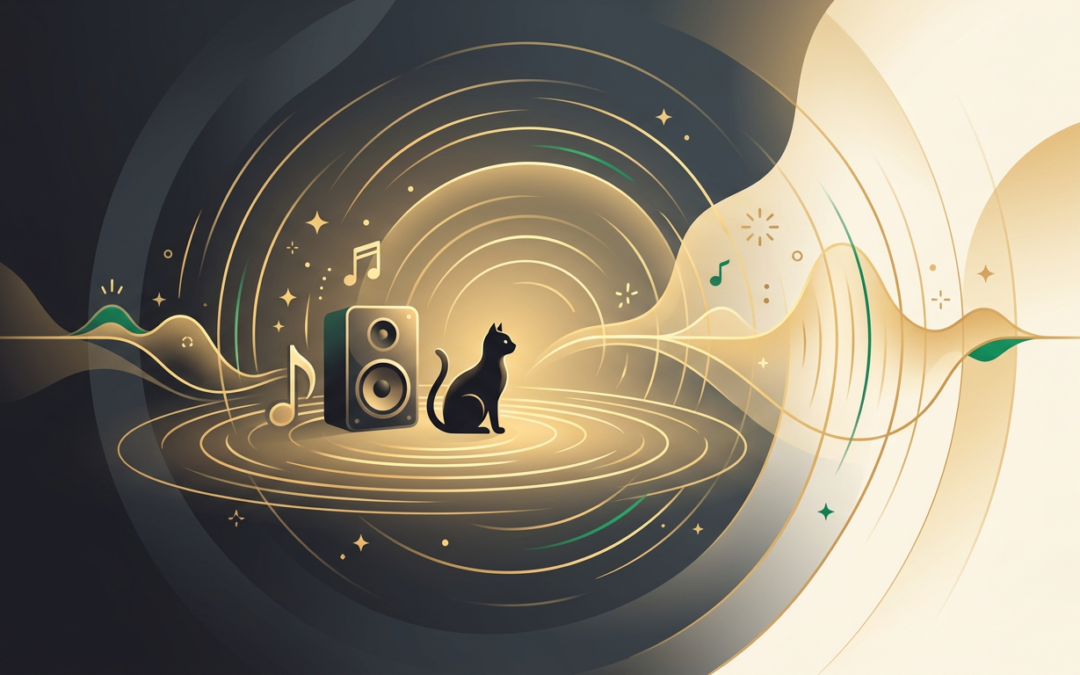
Close your eyes and think about a few brands you’d recognize by sound alone. A few notes. A little chime. Maybe just a tone of voice in a jingle you haven’t heard in years but could still hum on command. That’s not an accident — that’s sonic branding, and it works because sound reaches memory in a way images and words don’t always manage on their own.
Most small businesses never think about it. Not because it doesn’t matter to them, but because nobody’s ever explained what it actually is or how simple it can be to start.
What Sonic Branding Actually Means
Sonic branding is the intentional use of sound — a short musical signature, a tone, a voice style, a piece of ambient music — to represent your brand the same way a logo or a color palette does. It shows up anywhere your brand makes a sound: the start of a video, a voicemail greeting, a podcast intro, a moment on your website, the open of a social reel.
The most well-known versions are things like a phone company’s four-note chime or a streaming platform’s little audio “ta-dum.” But sonic branding doesn’t require that level of scale to work. A small nonprofit, a local studio, a solo creator — all of them can have a sound that’s unmistakably theirs, used consistently enough that people start to feel it before they even read a word.
Why It Works (Even for Small, Local Brands)
People remember feelings more reliably than they remember facts. A well-chosen sound triggers a feeling almost instantly — calm, energy, warmth, trust — often before the logo has even fully loaded on screen. That’s a real advantage in a world where most people are scrolling fast and reading very little.
Sound also builds a kind of quiet familiarity over time. The first time someone hears your sonic signature, it’s just a sound. The tenth time, it’s your sound — and recognition is most of what trust is built on. You don’t have to convince someone you’re legitimate if they already feel like they know you.
For nonprofits and local businesses especially, this matters because you’re usually competing for attention against much bigger names with much bigger budgets. Sonic branding doesn’t require a big budget. It requires being intentional once, and then using that same signature consistently everywhere your brand shows up.
Where a Sonic Signature Actually Gets Used
Once a brand has its own sound, it tends to show up in more places than people expect:
- The opening seconds of promotional or social videos
- A short audio moment on your website (played by choice, never forced on a visitor)
- Podcast or YouTube intros and outros
- Voicemail and phone hold moments
- Event or presentation openers
- Ad campaigns, especially short-form video ads
The goal isn’t to make noise everywhere. It’s to have one small, consistent audio signature that shows up in the handful of places people already encounter your brand — so it starts doing quiet recognition work in the background of everything else you do.
It’s Part of a Bigger Pattern, Not a Separate Thing
Sonic branding works best when it isn’t bolted on as an afterthought — it works best as one more piece of the same story your visuals and your words are already telling. The same warmth, the same energy, the same personality, just expressed through sound instead of through a color or a font. When those pieces move together, a brand starts to feel like a real, whole thing instead of a collection of separate marketing decisions.
That’s really the whole idea behind sound as part of brand memory: it’s not decoration. It’s another way for people to recognize you, feel something familiar, and trust you a little faster the next time they come across you.
Curious What Your Brand Could Sound Like?
This is exactly the kind of thing we love building at CatHouse Digital through Sonic Signature Studio — custom sonic identities for nonprofits, creators, and local businesses who want to be remembered, not just seen. If you’re curious what a sound built specifically for your brand might feel like, take a look at Sonic Signature Studio and hear a few examples for yourself.